Financing for gyms and studios
Memberships are the best kind of revenue a lender can read: same day, same amount, every month. The equipment is the expensive part.
How the money reads
An underwriter reads six months of statements. This is what yours usually says.
- Recurring billing makes the account unusually even, month to month.
- January is the peak and the summer is the trough, every year.
- Churn shows up as a slow drift rather than as a bad month.
Recurring billing is the most readable revenue there is: same day, same amount, every month. The costs sit flat underneath it, so what a lender is really reading is the trend of the top line.
The thing that slows these files down
Prepaid annual memberships arrive as one large deposit and then nothing. Flag them, or they read as a one-off rather than a year you have already earned.

What it usually pays for
- Racks, machines, flooring, mirrors
- A build-out, or a bigger unit
- Covering the quiet months before January
What an underwriter asks
The same four things decide every file: revenue and how long you have been making it, the cash cushion, bounced payments, and what you already pay other lenders. Here is what those look like in this trade.
- How much of the revenue is recurring?
- Membership billing is the most readable revenue there is: same day, same amount, every month. The share of the account that recurs is the strongest thing a fitness file has.
- Are there prepaid annual memberships?
- A year paid up front arrives as one large deposit and then nothing. Flag it, or it reads as a one-off rather than as twelve months you have already earned.
- What is the equipment already costing?
- Racks and machines are usually financed already, and what is still owed on them decides the room left for the next thing.
- 1Revenue, and how longThe monthly average, and the years behind it
- 2The cash cushionAverage daily balance, against a month of revenue
- 3Bounced paymentsNSF and returned items over ninety days
Totalled against monthly revenue and capped at 20% — the ceiling we pre-qualify to. This is the one that binds: two advances already running leaves less room than none, however good the rest looks.
The split shown is an example, not your file. Yours is read by a person, from your own statements.
Asking for the right amount
Equipment is a quote. A January bridge is a number of months — say which months and why, because "covering the summer" is a use of funds an underwriter can price and "working capital" is not.
Across every trade the anchor is the same: roughly a month of revenue, and never more than the statements support. What you already pay other lenders matters as much as what you are asking for, and you need an average of at least $20,000 a month to qualify at all.
When to ask
January is the peak and it is the wrong time to be arranging money. Equipment for January is a September or October decision; a bridge through the summer is a spring one.
Have these ready as well
On top of the standard file — six months of statements, your incorporation documents, your CRA business number and photo ID.
- The lease, especially for a build-out or a larger unit
- Quotes for equipment and flooring
- A membership report showing active members and monthly billing, if you have one
- Insurance certificates for the premises and the instruction
What usually fits
In this order, more often than not — though the file decides, not the trade.
Equipment financing
The oven, the van, the line. Financed against the thing itself, so the payment sits against what the thing earns.
$10,000 – $1,000,000
Term loans
A fixed amount, a fixed schedule, and nothing pledged against it. The straightest answer when you know the number and the timeline.
$5,000 – $2,000,000
Revenue-based line of credit
Draw what you need, pay for what you draw, and the limit moves with your revenue. For months that are uneven, not short.
Up to $500,000
Where these files get harder
None of these is an automatic no. They are the things that turn a one-day decision into a conversation, and all of them are better said by you than found by an underwriter.
- Founding-member rates that have never been repriced
- Revenue that is mostly drop-ins and class packs rather than recurring billing
- Churn that has been running long enough to show as a downward drift
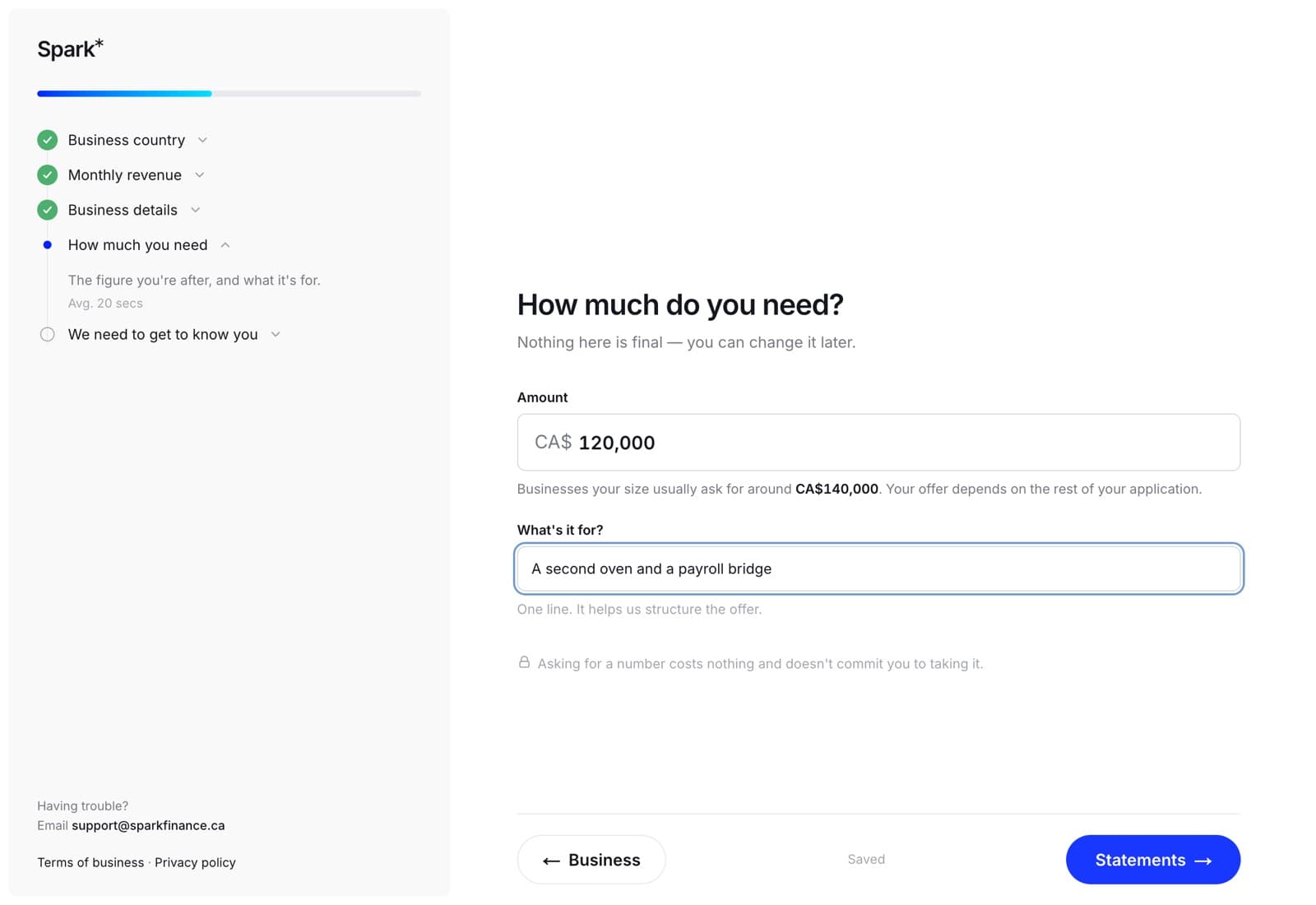
Any of these is one sentence in the box that asks what the money is for.
Said on the way in it costs you nothing. Found in the statements by somebody who then has to ask, it costs a day.
Questions
No. It happens every year in this trade and it is read as the shape of the business. A summer trough with a January peak is a pattern, not a warning.
Still deciding? Talk to a specialist — no application required.
Worth reading next
- GuideHow much can my business actually borrow?Why the number comes from your deposits rather than your revenue, and the four things that move it up or down.
- WritingAn advance or a line of credit?They solve different problems. Which one fits a one-off purchase, and which fits an uneven month.
Other trades
See what you qualify for.
About ten minutes, most of it finding your statements. Applying never touches your credit score.