Financing for medical and dental practices
The chair, the scanner, the fit-out. Practice money is nearly always equipment money, and the equipment outlives the loan.
How the money reads
An underwriter reads six months of statements. This is what yours usually says.
- Insurer and plan payments land on a predictable cycle. Patient payments land daily.
- Revenue is steady and rarely seasonal, which reads well.
- A new associate or a second operatory shows up as a step change, not a spike.
About as level as an account gets: patients pay daily, plans pay on a cycle, and the costs are the same every month. It is the steadiness that reads well, not the size.
The thing that slows these files down
If you bill through a professional corporation and an operating one, send both sets of statements. We read the whole picture or a smaller one.

What it usually pays for
- A chair, a scanner, a mill, a laser
- Buying into a practice, or buying one out
- A fit-out or a move to a bigger space
What an underwriter asks
The same four things decide every file: revenue and how long you have been making it, the cash cushion, bounced payments, and what you already pay other lenders. Here is what those look like in this trade.
- Which corporation is applying?
- Many practices run a professional corporation and an operating company. Send both sets of statements. A file with one of them reads as half a practice.
- How does the plan payment cycle look?
- Insurer and plan payments land on a predictable rhythm, which is one of the reasons practice files read well. Patient payments land daily on top of it.
- What is already owed on equipment?
- A chair or a scanner bought three years ago is usually still being paid for, and in this trade that is more often the number that decides the answer than the revenue is.
- 1Revenue, and how longThe monthly average, and the years behind it
- 2The cash cushionAverage daily balance, against a month of revenue
- 3Bounced paymentsNSF and returned items over ninety days
Totalled against monthly revenue and capped at 20% — the ceiling we pre-qualify to. This is the one that binds: two advances already running leaves less room than none, however good the rest looks.
The split shown is an example, not your file. Yours is read by a person, from your own statements.
Asking for the right amount
Equipment has a quote, so ask for the quote. For a buy-in or a buy-out, the number comes from the agreement rather than from revenue, and it is worth saying which of the two you are doing.
Across every trade the anchor is the same: roughly a month of revenue, and never more than the statements support. What you already pay other lenders matters as much as what you are asking for, and you need an average of at least $20,000 a month to qualify at all.
When to ask
Practice revenue is steady rather than seasonal, so there is no month that reads better. The timing that matters is the equipment's: order lead times are long, and financing agreed before the order removes a deposit from your own account.
Have these ready as well
On top of the standard file — six months of statements, your incorporation documents, your CRA business number and photo ID.
- Your professional licence and college registration
- Statements for the professional corporation and the operating company
- The equipment quote, or the purchase agreement for a buy-in
- The lease, for a fit-out or a move
What usually fits
In this order, more often than not — though the file decides, not the trade.
Equipment financing
The oven, the van, the line. Financed against the thing itself, so the payment sits against what the thing earns.
$10,000 – $1,000,000
Term loans
A fixed amount, a fixed schedule, and nothing pledged against it. The straightest answer when you know the number and the timeline.
$5,000 – $2,000,000
Asset-based lending
Your receivables, inventory or equipment doing some work while you still hold them. Security usually prices better than an unsecured facility.
$50,000 – $2,000,000
Where these files get harder
None of these is an automatic no. They are the things that turn a one-day decision into a conversation, and all of them are better said by you than found by an underwriter.
- An associate-only practice with no corporation behind it
- An associate-run practice where the billings leave before they reach the company
- Equipment finance already running on several units at once
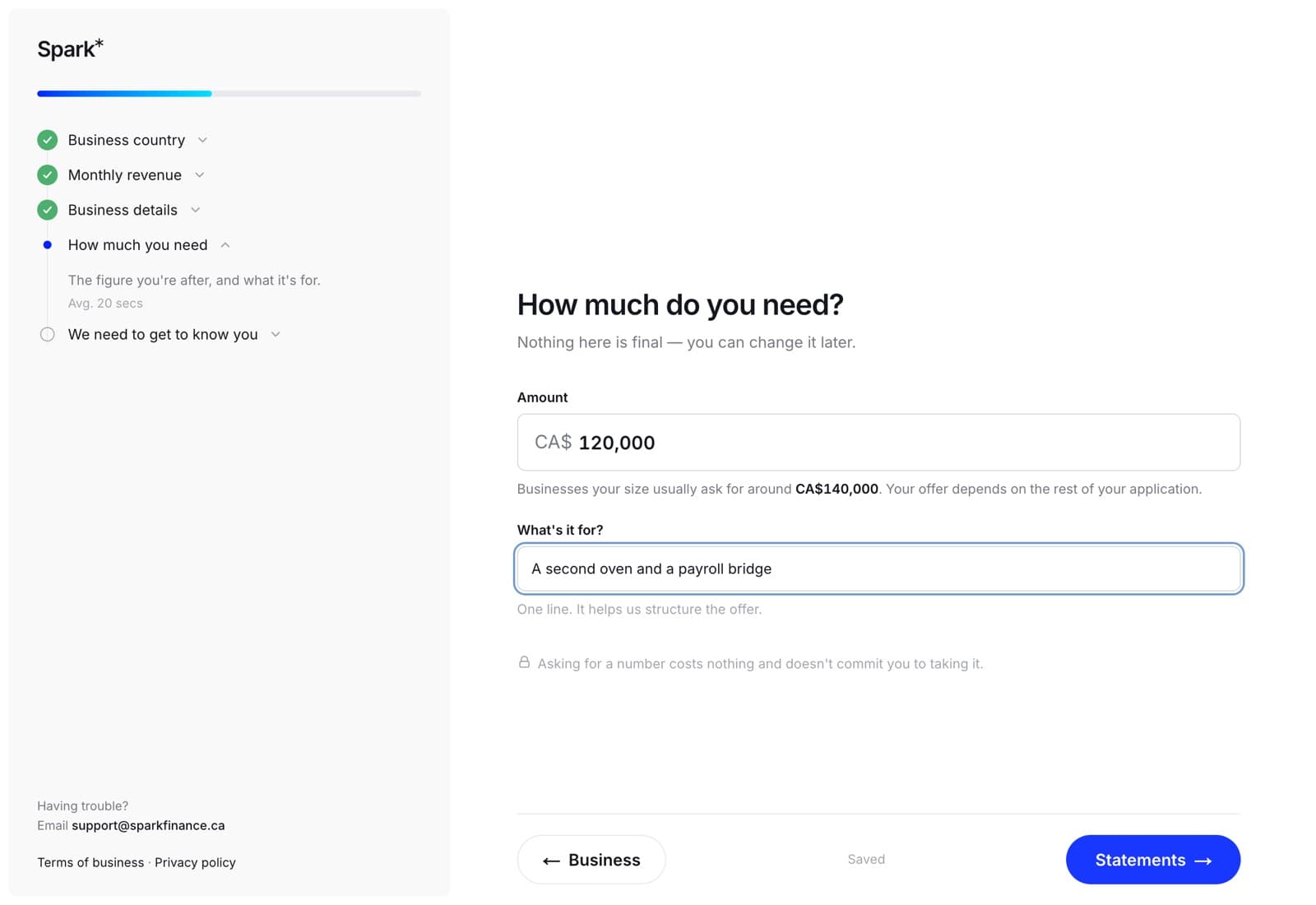
Any of these is one sentence in the box that asks what the money is for.
Said on the way in it costs you nothing. Found in the statements by somebody who then has to ask, it costs a day.
Questions
Yes, and it is a common reason to apply. The purchase agreement matters more here than in most files.
Still deciding? Talk to a specialist — no application required.
Worth reading next
- GuideHow much can my business actually borrow?Why the number comes from your deposits rather than your revenue, and the four things that move it up or down.
- WritingWhat an underwriter is looking forThe eight things a person actually checks on your file, in the order they check them, and what each one is really asking.
Other trades
See what you qualify for.
About ten minutes, most of it finding your statements. Applying never touches your credit score.