Financing for salons and barbershops
Chairs earn when they are full. Most shop money buys another chair, a better room, or the stock to sell from it.
How the money reads
An underwriter reads six months of statements. This is what yours usually says.
- Card settles daily. Tips and cash only count once they are deposited.
- Booth renters change the shape of the account: rent in, service revenue out.
- December is busy and February is not. That is the trade, not a problem.
Chairs earn every day the door is open. Rent lands in one piece. Booth rent, if you have it, sits underneath as the steady part — which is why it matters that a lender knows which is which.
The thing that slows these files down
If most of your chairs are rented out, say so. A lender reading booth rent as service revenue is reading your business wrong.

What it usually pays for
- Chairs, basins, dryers, a colour bar
- A second location, or the lease next door
- Retail stock to sell alongside the service
What an underwriter asks
The same four things decide every file: revenue and how long you have been making it, the cash cushion, bounced payments, and what you already pay other lenders. Here is what those look like in this trade.
- Is this service revenue or booth rent?
- They are different businesses in the same room. A shop that mostly rents chairs has smaller, steadier revenue than one that mostly sells services, and a lender reading one as the other is reading the shop wrong.
- What reaches the bank?
- Card settles daily and shows up cleanly. Cash and tips only count once they are deposited, because an underwriter reads the account rather than the till.
- How thin is the cushion?
- Rent and product are steady; revenue is not. The average daily balance measured against a month of revenue is what separates two shops with the same sales.
- 1Revenue, and how longThe monthly average, and the years behind it
- 2The cash cushionAverage daily balance, against a month of revenue
- 3Bounced paymentsNSF and returned items over ninety days
Totalled against monthly revenue and capped at 20% — the ceiling we pre-qualify to. This is the one that binds: two advances already running leaves less room than none, however good the rest looks.
The split shown is an example, not your file. Yours is read by a person, from your own statements.
Asking for the right amount
A chair, a basin and a colour bar all have prices — ask for the sum of them. For a second location the number is the fit-out plus a few months of rent, and saying that out loud gets it read faster.
Across every trade the anchor is the same: roughly a month of revenue, and never more than the statements support. What you already pay other lenders matters as much as what you are asking for, and you need an average of at least $20,000 a month to qualify at all.
When to ask
December is the busiest month and February the quietest. Apply in the quiet one: most decisions come back within a business day, and you will actually have time to read the offer.
Have these ready as well
On top of the standard file — six months of statements, your incorporation documents, your CRA business number and photo ID.
- The lease for the space, and for the space next door if that is the plan
- Quotes for chairs, basins, dryers or a colour bar
- Booth rental agreements, if renters are a meaningful share of revenue
- Any municipal or provincial licence your trade requires
What usually fits
In this order, more often than not — though the file decides, not the trade.
Term loans
A fixed amount, a fixed schedule, and nothing pledged against it. The straightest answer when you know the number and the timeline.
$5,000 – $2,000,000
Equipment financing
The oven, the van, the line. Financed against the thing itself, so the payment sits against what the thing earns.
$10,000 – $1,000,000
Revenue-based line of credit
Draw what you need, pay for what you draw, and the limit moves with your revenue. For months that are uneven, not short.
Up to $500,000
Where these files get harder
None of these is an automatic no. They are the things that turn a one-day decision into a conversation, and all of them are better said by you than found by an underwriter.
- Cash sales that never reach the bank
- Chairs let to renters who pay you in cash
- Revenue that is mostly booth rent, described as service revenue
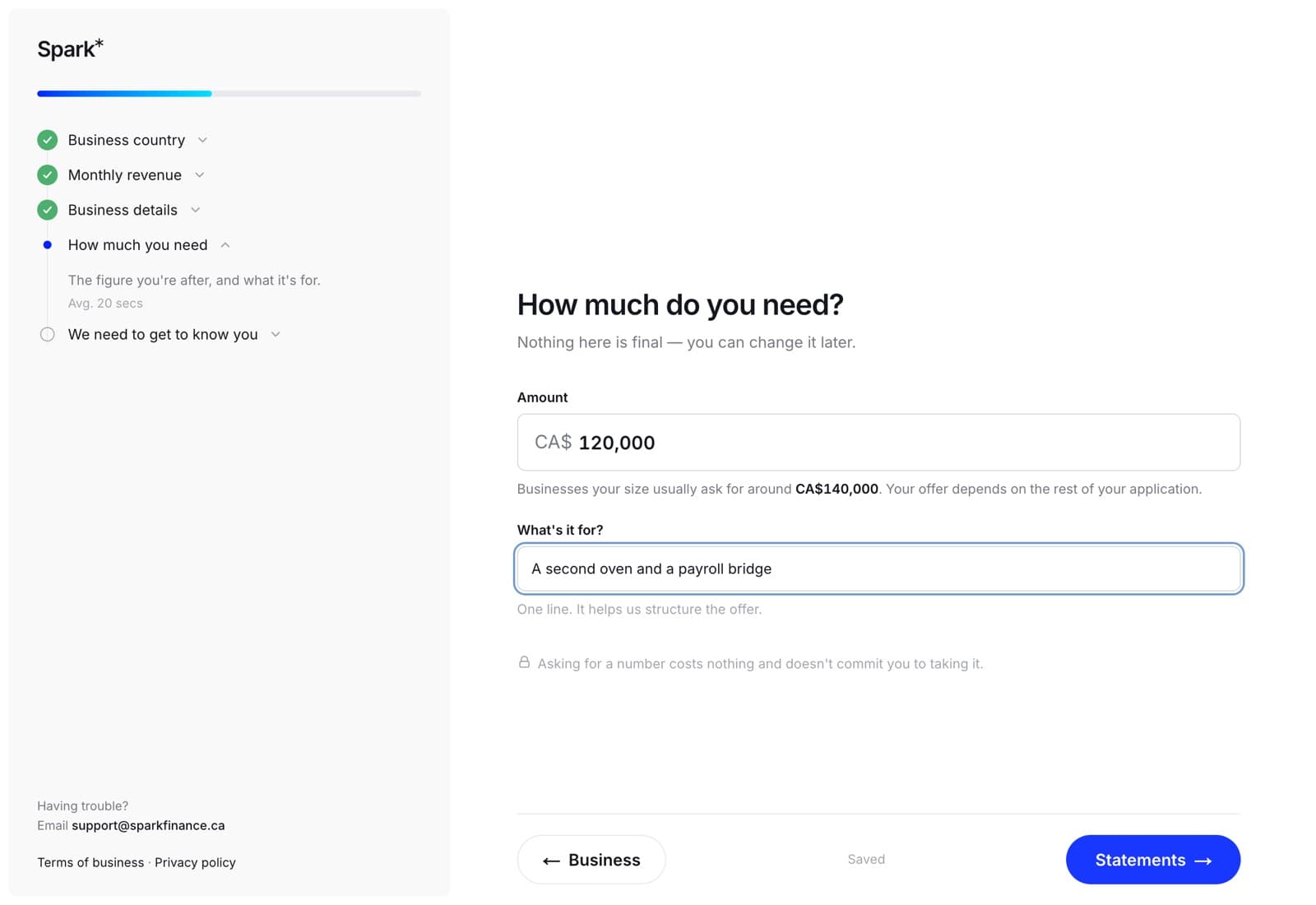
Any of these is one sentence in the box that asks what the money is for.
Said on the way in it costs you nothing. Found in the statements by somebody who then has to ask, it costs a day.
Questions
Yes. Say so, because it changes how the account is read. Booth rent is steadier and smaller than service revenue and a lender should be pricing it as what it is.
Still deciding? Talk to a specialist — no application required.
Worth reading next
- GuideWhat working capital actually costsHow to read a funding offer in dollars instead of rates, and the three numbers that decide whether it is worth taking.
- GuideWhy we ask for six months of statementsWhat an underwriter actually reads in your bank statements, and why it is usually better for you than a credit score.
Other trades
See what you qualify for.
About ten minutes, most of it finding your statements. Applying never touches your credit score.